


A practical guide to pre-use checks for harnesses, lanyards, ropes, connectors, fall arrest equipment and lifting accessories. Learn what to look for, when to remove equipment from use, and how to keep clear records.
Work at height equipment and lifting accessories should be checked before use so obvious defects, damage, missing parts or expired items are identified before someone relies on the equipment.
A pre-use check does not replace a formal inspection, service, or LOLER thorough examination where required. It is a practical user check carried out before equipment is used, helping staff decide whether an item appears safe to use or should be removed from service and reported.
RISE Safety helps businesses create clear daily check routines, train staff on what to look for, and keep digital records of checks, defects and inspection history.
Employers and dutyholders should also refer to official HSE guidance on work at height, PPE at work and lifting equipment where applicable.
Different checks have different purposes.
Pre-use check
A quick user check before the equipment is used. This is normally focused on visible damage, missing parts, obvious defects, expiry dates, labels and correct function.
Formal inspection
A more detailed recorded inspection carried out by a competent person at suitable intervals.
LOLER thorough examination
A statutory examination for lifting equipment and lifting accessories where required. LOLER requires lifting equipment to be fit for purpose, suitable for the task, suitably marked and, in many cases, subject to periodic thorough examination.
The important point is that users should know what they are allowed to check, when to stop using equipment, and how to report a problem.
Before using work at height or lifting equipment, carry out a simple pre-use check. This does not replace formal inspection, servicing or LOLER thorough examination where required, but it helps identify obvious defects before the equipment is used.

Check the full item under good lighting. Look for cuts, fraying, burns, contamination, corrosion, missing parts, unreadable labels, expired dates or anything that looks different from normal.
Run your hands along webbing, rope or straps to feel for stiffness, roughness, soft spots, swelling, brittleness or sticky areas. Check metal parts for burrs, sharp edges or rough surfaces.
Check that buckles, D-rings, karabiners, clasps and locking parts move freely and lock correctly. If anything sticks, fails to close, or does not operate as expected, remove the equipment from use.
Record the check with the date, user, equipment ID or serial number, result and any notes. If using the RISE App, scan the NFC tag and record the result digitally.
If in doubt, remove the item from use and report it. It is better to quarantine equipment unnecessarily than to use faulty safety equipment.
Work at height equipment and lifting accessories should be checked before use for visible damage, contamination, missing identification or anything that may affect safe operation.Some equipment may remain in circulation with minor damage or wear only where it has already been assessed, recorded and placed under monitor by a competent person. If the item is under monitor, check the RISE App for the recorded notes and photos, then compare the current condition before use.If the damage is new, has worsened, or is not already recorded, remove the item from use and report it.
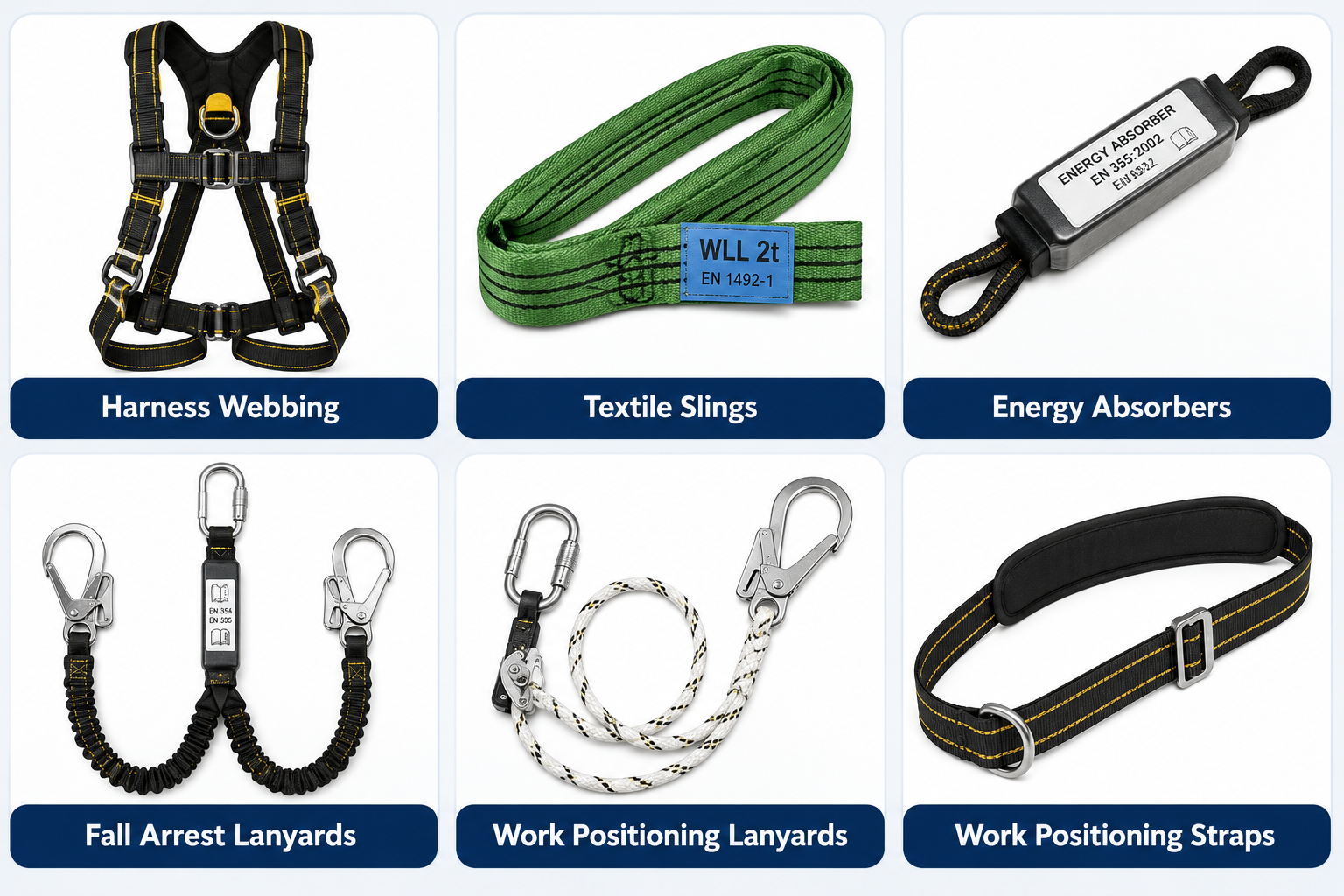
Webbing, straps and stitching are found on many types of work at height and lifting equipment. The examples below are not an exhaustive list, but show common items where users should check for cuts, fraying, melted fibres, damaged stitching, contamination or other changes in condition before use.
.png)
Cuts, fraying, melted fibres or heat damage can weaken webbing, straps, slings, lanyards and harness components. Check the full length of the material, including edges, stitching areas, contact points and areas that rub against fittings or other surfaces.
.png)
.png)
.png)
Action: If this damage is found and it is not already recorded as under monitor, remove the equipment from use and report it. If it is already under monitor, compare it with the RISE App photo record and remove it from use if the condition has worsened.
Stitching is a critical part of many harnesses, lanyards, slings and webbing assemblies. Loose, broken, missing or discoloured stitching may indicate wear, damage, UV exposure, contamination or previous loading. Check for loose threads, broken stitch lines, gaps in stitching, faded stitching, pulled threads or stitching that no longer looks even and secure.
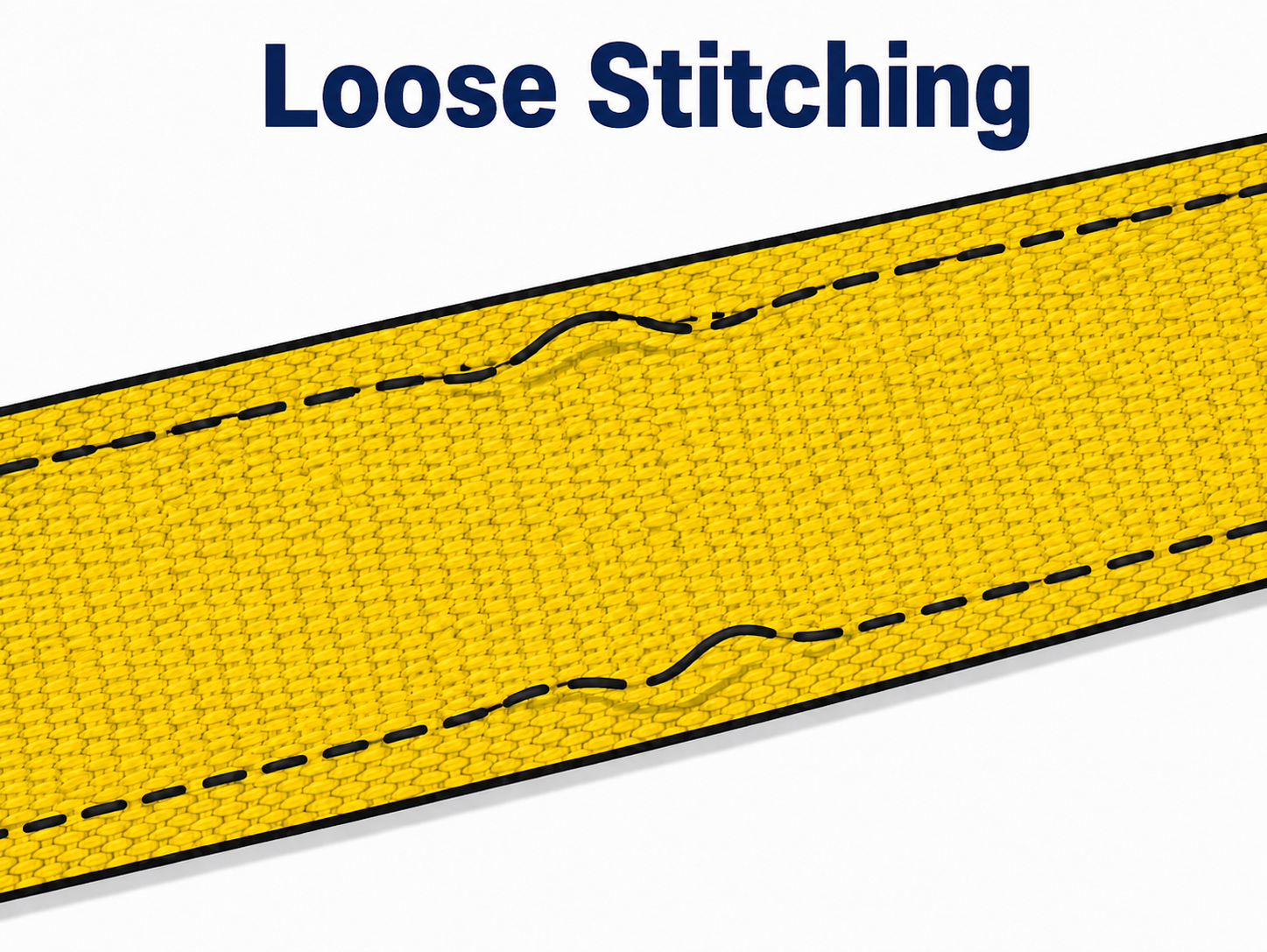
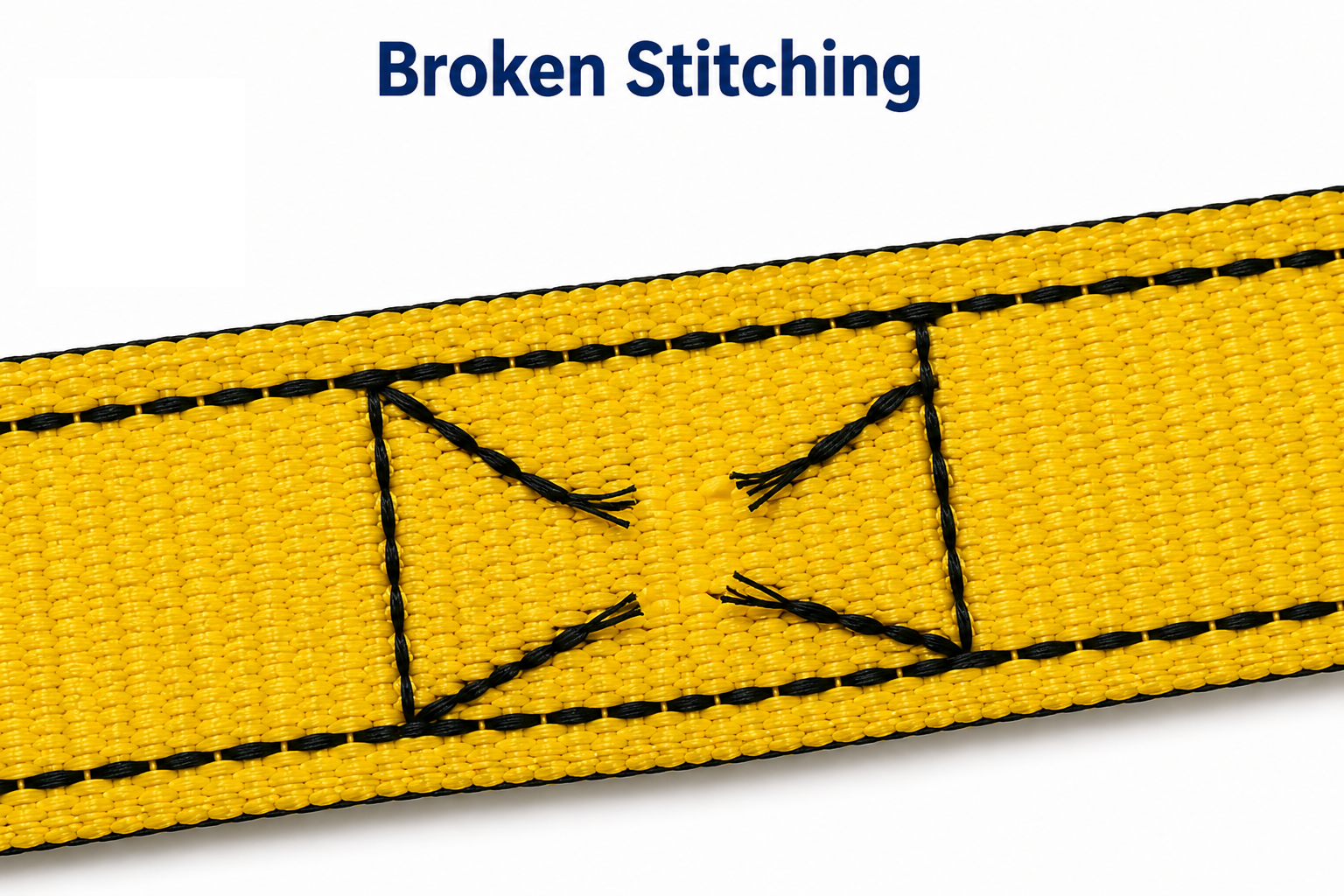
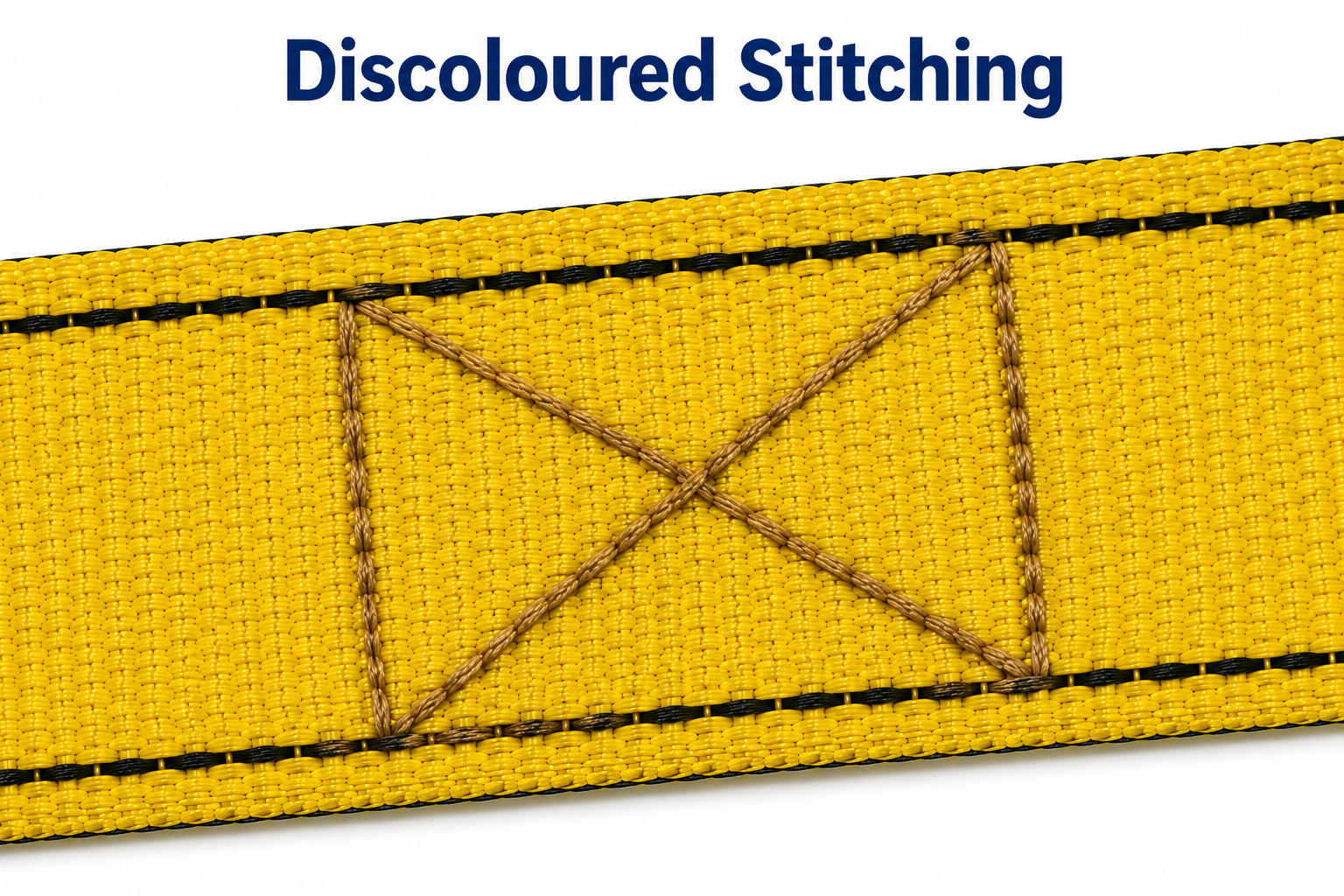
Action: Do not ignore damaged stitching. Check the equipment record in the RISE App. If the stitching damage is new, worsening, or not already approved under monitor, remove the equipment from use and report it.
Chemical, oil or paint contamination can affect the strength and condition of safety equipment. Contamination may hide damage, weaken fibres, affect stitching or make it difficult to inspect the item properly. Look for stains, bleaching, oily patches, sticky areas, paint marks, chemical residue, unusual smells, stiffness, swelling or material that feels different from normal.
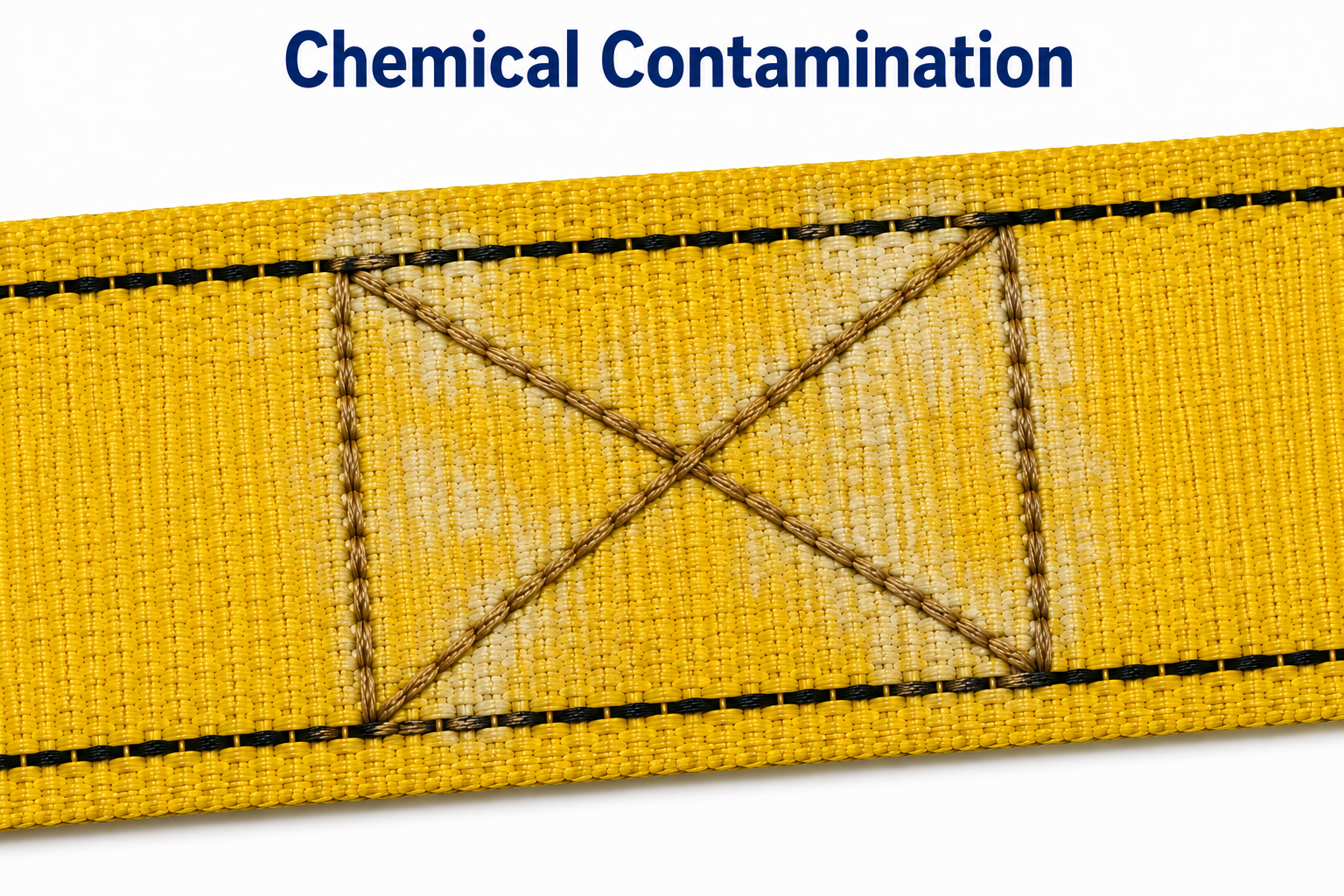
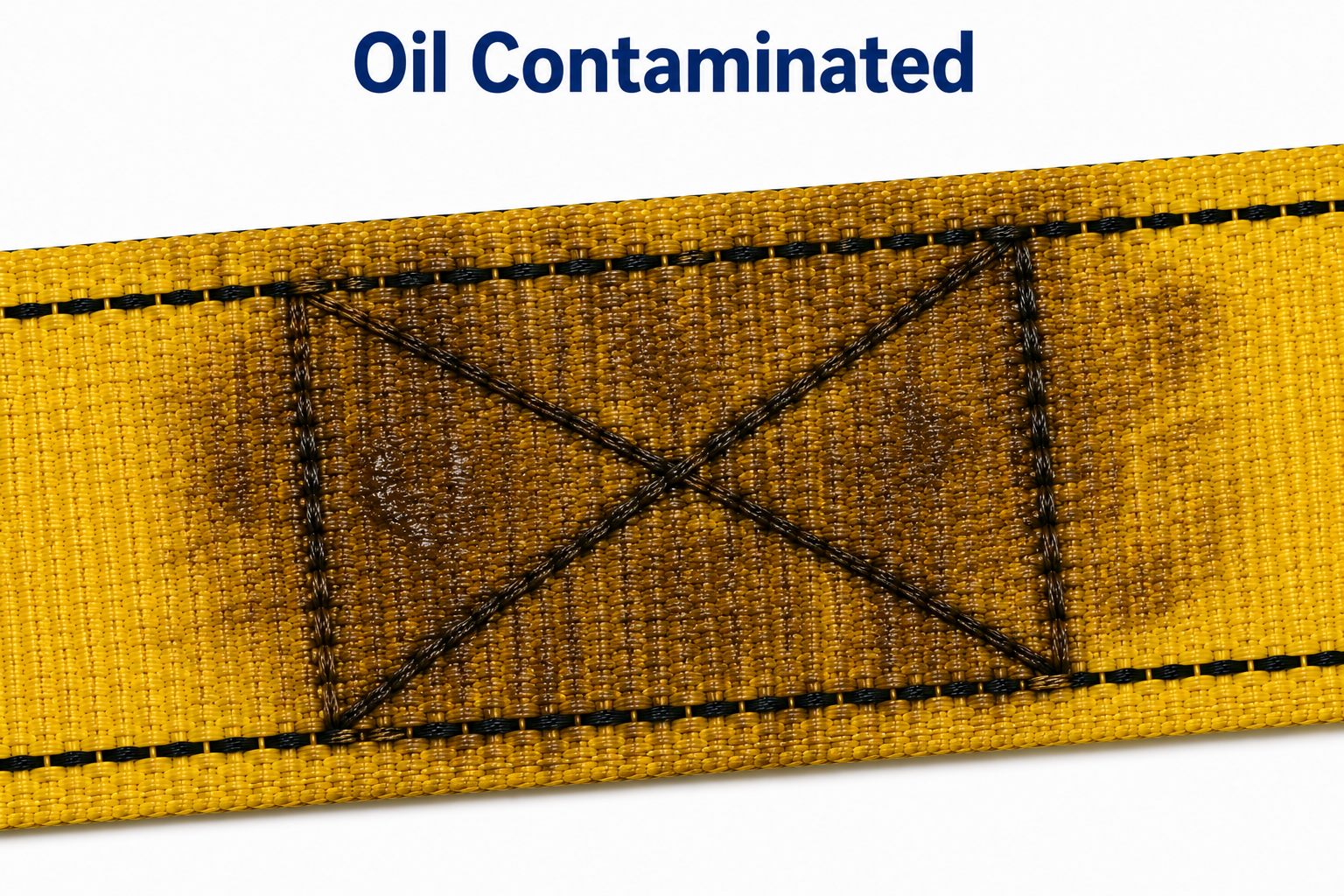
.png)
Action:If contamination is found, check whether it is already recorded in the RISE App. If it is new, unknown, spreading, or makes the equipment difficult to inspect, remove the item from use and report it.
Webbing, straps, slings and lanyards should remain flexible and consistent along their full length. During a pre-use check, run your hands along the material and feel for any areas that are stiff, sticky, swollen, brittle, soft, rough or different from the rest of the item.Changes in feel may indicate chemical damage, heat damage, contamination, age-related degradation, moisture damage or internal weakening that may not be obvious from a quick visual check.
.png)
.png)
.png)
Action: If the material feels different from normal and the issue is not already recorded as under monitor, remove the equipment from use and report it. If it is already under monitor, compare the current condition with the RISE App notes and photos before use.
Fading, bleaching, surface wear or a dry/brittle feel may indicate UV exposure, age, abrasion or general deterioration. Pay particular attention to areas exposed to sunlight, rubbing, repeated handling, buckles, attachment points and edges.Excessive wear can reduce the strength of webbing, stitching and textile components even if the item still appears usable at first glance.
.png)
.png)
.png)
Action: If fading, UV damage or wear appears significant, worsening, or not already recorded, remove the equipment from use and report it. If the item is under monitor, check the RISE App photo record and confirm the condition has not worsened.
Metal components should be checked before use for corrosion, cracks, sharp edges, distortion, wear and correct operation. This includes karabiners, scaffold hooks, snap hooks, D-rings, adjusters, buckles, rings and other load-bearing fittings. If a metal part is damaged, stiff, loose, bent or not operating correctly, the item should be removed from use and reported.
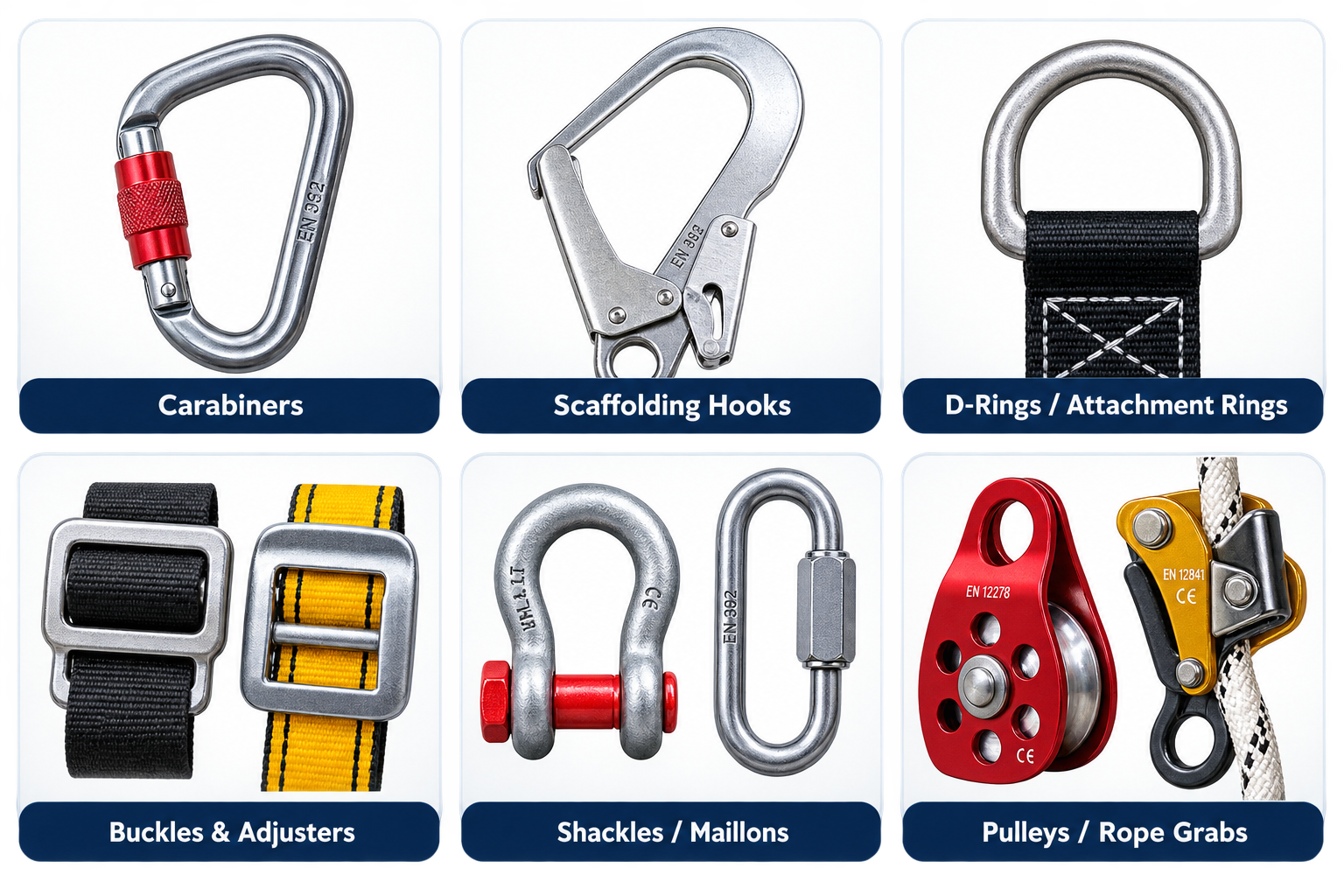
Corrosion, rust or pitting can weaken metal components and affect how connectors, buckles, gates, locks and moving parts operate. Surface marks may look minor at first, but deeper corrosion or pitting can reduce strength and make the item unsafe to use.Check all metal parts carefully, especially around gates, hinges, pins, locking sleeves, rivets, screw links, D-rings, shackles, buckles and areas where rope or webbing makes contact.
.png)
.png)
.png)
Action: If corrosion, rust or pitting is found and it is not already recorded as under monitor, remove the equipment from use and report it. If the item is already under monitor, compare it with the RISE App notes and photo record. Remove it from use if the condition has worsened, spread, or affected the operation of any moving part.
Metal components should keep their original shape and should not show cracks, bending, twisting, stretching or deformation. Damage like this may indicate impact, overload, incorrect use, side loading or previous fall arrest/loading.Check karabiners, scaffold hooks, D-rings, buckles, adjusters, shackles, maillons, pulleys, rope grabs and other metal fittings for visible cracks, bent gates, twisted bodies, stretched openings, damaged pins or parts that no longer sit correctly.Even small changes in shape can affect strength and safe operation.
.png)
.png)
.png)
Action: If cracks, bending or distortion are found and they are not already recorded as under monitor, remove the equipment from use and report it. If the item is already under monitor, compare it with the RISE App notes and photo record. Remove it from use if the condition has worsened or if the component no longer operates correctly.
Sharp edges, burrs, grooves or worn metal surfaces can damage ropes, webbing, straps and stitching. Excessive wear can also reduce the strength of the metal component itself, especially where material has been worn away at contact points.Check karabiners, scaffold hooks, D-rings, buckles, adjusters, shackles, maillons, pulleys, rope grabs and other metal fittings for rough edges, sharp points, deep grooves, flattening, worn surfaces or material loss.Pay close attention to areas where rope, webbing, pins, gates or moving parts make regular contact.If wear appears to be around 10% or more of the original material thickness, diameter or section, the item should be removed from use and assessed by a competent person. If the original size cannot be confirmed, treat the item as questionable and report it.
.png)
.png)
.png)
Action: If sharp edges, burrs or excessive wear are found and they are not already recorded as under monitor, remove the equipment from use and report it. If the item is already under monitor, compare it with the RISE App notes and photo record. Remove it from use if the wear has increased, the surface has become sharp, or the item could damage rope, webbing or other equipment.
Gates, locking sleeves, pins, hinges, cams, rollers and other moving parts should operate smoothly and return to the correct position without sticking, jamming or excessive looseness.Check karabiners, scaffold hooks, snap hooks, rope grabs, pulleys, buckles, adjusters, shackles and maillons for correct opening, closing, locking and movement. Gates should close fully. Locks should engage correctly. Moving parts should not be seized, stiff, loose, damaged or blocked by dirt, corrosion, paint or contamination.A connector or device may look acceptable at first glance, but if the gate, lock or moving mechanism does not work correctly, it should not be used.
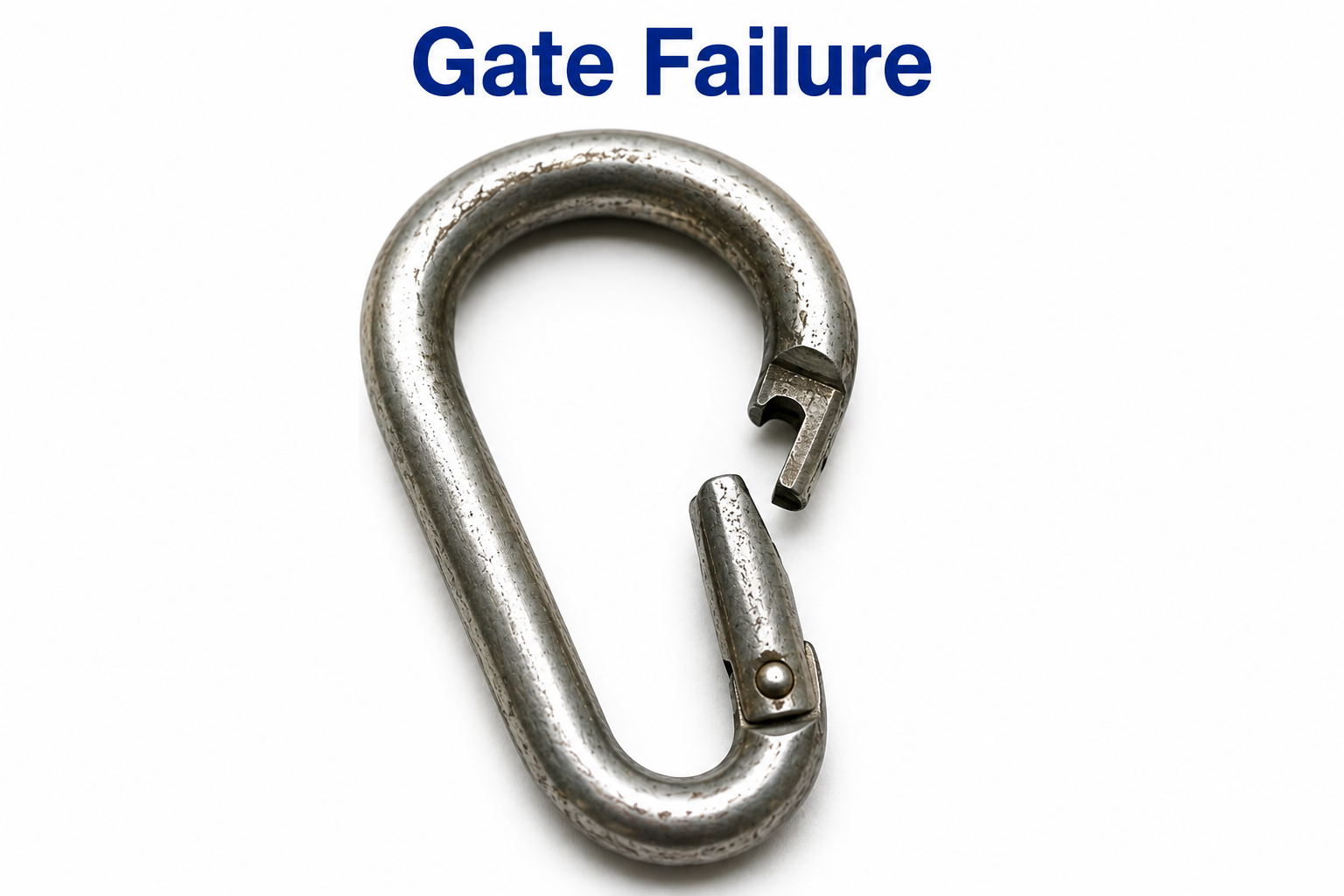
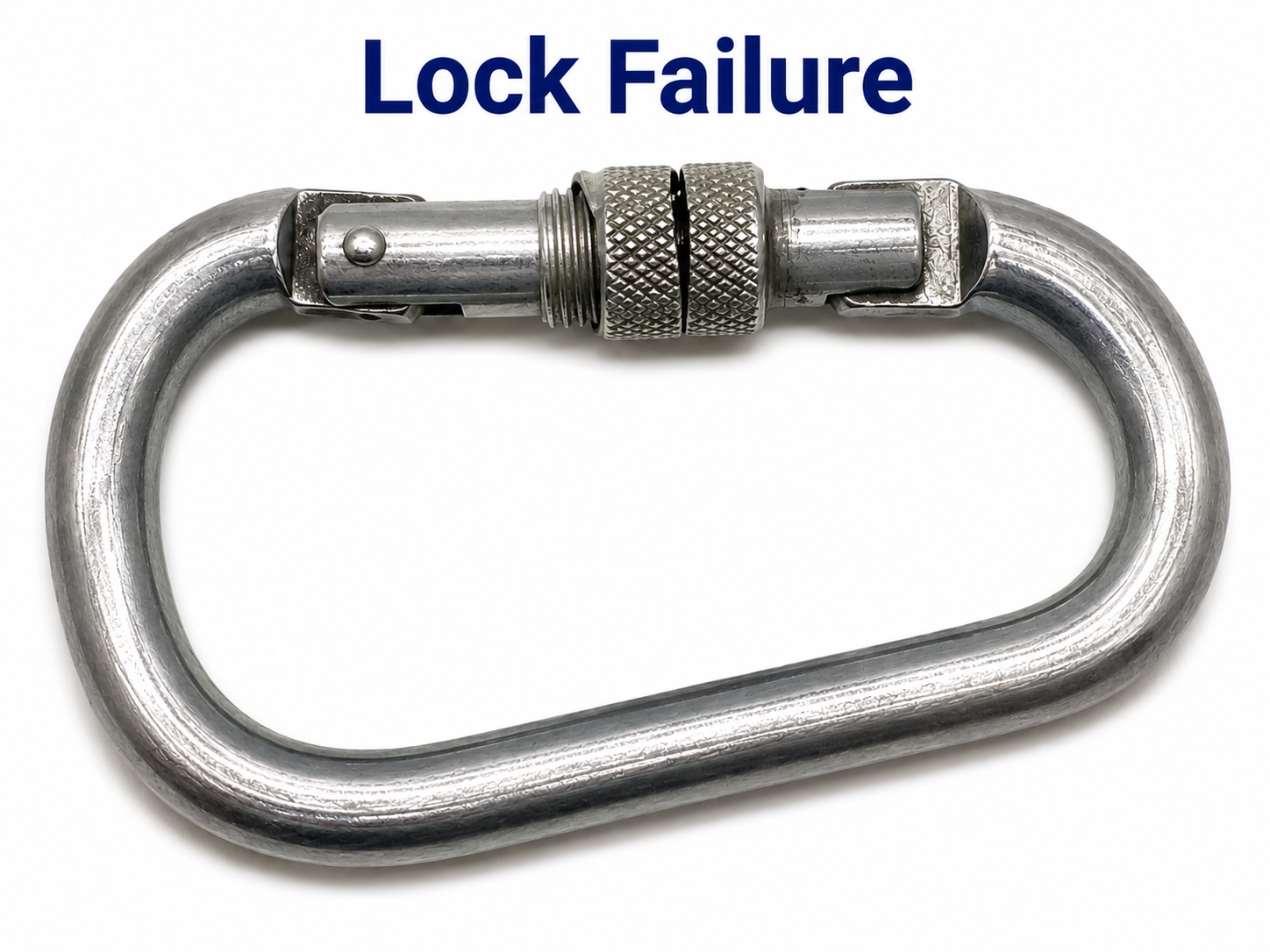
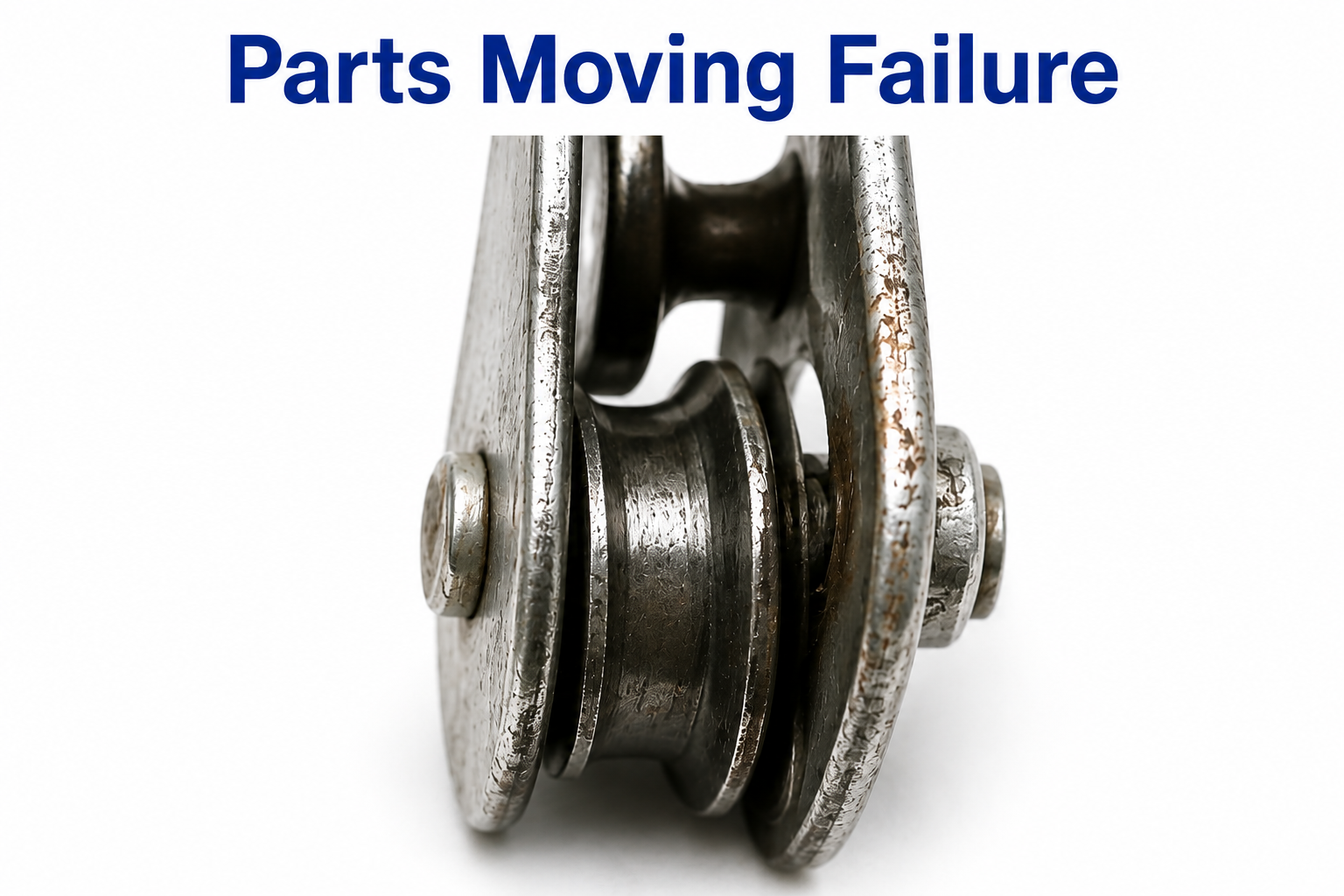
Action: If a gate, lock or moving part fails to operate correctly and it is not already recorded as under monitor, remove the equipment from use and report it. If the item is already under monitor, compare it with the RISE App notes and photo record. Remove it from use if the problem has worsened, the part no longer locks securely, or the equipment cannot be used exactly as intended.
Action: If a gate, lock or moving part fails to operate correctly and it is not already recorded as under monitor, remove the equipment from use and report it. If the item is already under monitor, compare it with the RISE App notes and photo record. Remove it from use if the problem has worsened, the part no longer locks securely, or the equipment cannot be used exactly as intended.
Ropes and rope-based equipment are found on many types of work at height, fall arrest, rescue and positioning systems. The examples below are not an exhaustive list, but show common items where users should check for cuts, glazing, sheath damage, exposed core, kinks, soft spots, stiffness, contamination, damaged terminations, missing labels or other changes in condition before use.
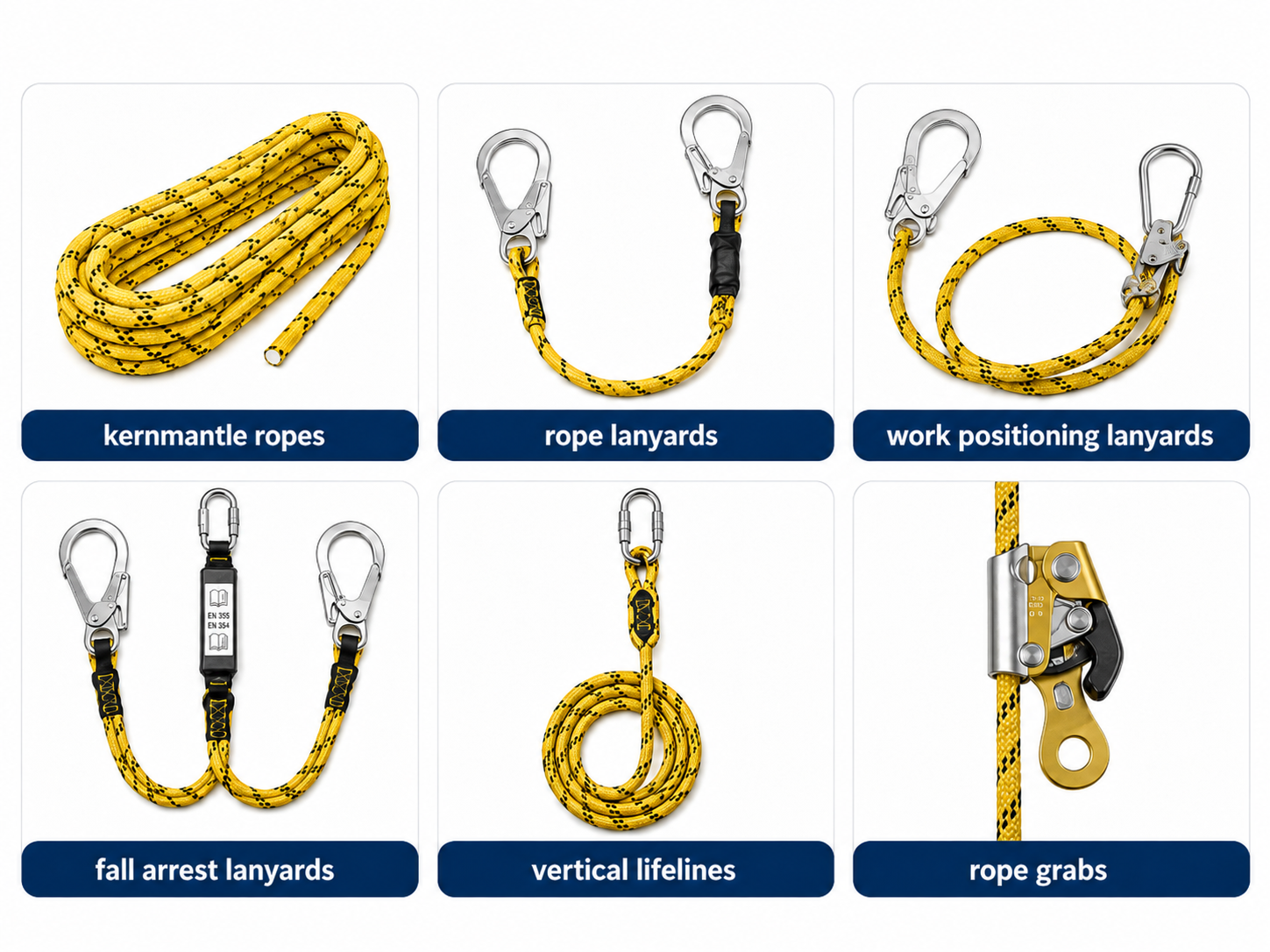
Rope should be checked along its full length before use. Cuts, glazing or damage to the outer sheath can affect the strength and performance of the rope, especially if the inner core may have been exposed or damaged.Look for cut fibres, worn areas, flattened sections, melted or shiny patches, abrasion, fraying, broken sheath fibres or areas where the rope surface looks different from normal. Glazing may be caused by heat, friction or rope running over an edge or device under load.
.png)
.png)
.png)
Action: If cuts, glazing or sheath damage are found and the issue is not already recorded as under monitor, remove the rope from use and report it. If it is already under monitor, compare it with the RISE App notes and photo record. Remove it from use if the damage has worsened, spread, or exposed the core.
The inner core of kernmantle rope provides much of the rope’s strength. If the core is visible, damaged, uneven or affected by impact, the rope may no longer be safe to use.Check for exposed core, bulges, soft spots, flat spots, crushed areas, kinks, uneven diameter, lumps or areas that feel thinner, harder or softer than the rest of the rope. Pay attention to areas around knots, terminations, rope grabs, pulleys, descenders and contact points.
.png)
.png)
.png)
Action: If the core is exposed, or the rope has kinks, flat spots, bulges or unusual changes in shape or feel, remove it from use and report it. If the issue is already recorded as under monitor, check the RISE App record before use and remove it from service if the condition has changed or worsened.
Rope should remain flexible and consistent along its full length. Stiffness, contamination or damaged terminations may indicate chemical exposure, heat damage, age-related deterioration, poor storage, previous loading or damage that is not obvious from a quick visual check.Look for stiff sections, sticky areas, swelling, chemical staining, oil, paint, grit, unusual smell, discolouration, damaged stitching, worn thimbles, loose protective covers, damaged sewn eyes, missing labels or terminations that no longer look secure.
.png)
.png)
.png)
Action: If the rope feels different from normal, is contaminated, or has damaged terminations, remove it from use and report it unless the issue has already been assessed and recorded. If it is under monitor, check the RISE App notes and photos before use and remove it from service if the condition has worsened.
Labels, markings and NFC tags help confirm what the equipment is, when it was last checked, when it is next due, and whether it is fit for use. A pre-use check should include the equipment’s identification, manufacturer label, inspection status and digital record where available. The NFC tag does not replace the manufacturer’s label, but it helps users quickly access the RISE equipment record, service history, certificates, notes, photos and current status.
Missing or Unreadable Labels
If the equipment cannot be identified, its serial number cannot be confirmed, or the manufacturer’s markings are missing or unreadable, do not guess. Remove the item from use and report it until its identity and history can be confirmed.
Expired Inspection, Service or Lifespan Dates
Check the inspection date, service date, expiry date and any manufacturer lifespan information. If the item is overdue, expired, or the status cannot be confirmed, do not use it until it has been checked.
NFC Tag or Digital Record Issue
If the NFC tag is missing, damaged, will not scan, or opens the wrong equipment record, report it. The physical equipment must match the digital record before it is used.
If equipment appears damaged, overdue, unidentified or unsafe, do not continue using it.
Follow a simple process:
1. Stop using the equipment immediately.
2.Mark it as Not Fit for Purpose or place it in quarantine.
3.Record the issue with notes and photos where possible.
4.Report it to a supervisor, safety officer or competent person.
5.Do not return the item to use until it has been checked, repaired, replaced or formally cleared.
If the equipment is already marked Under Monitor, check the RISE App notes and photos before use. If the condition has worsened or you are unsure, remove it from use and report it.
If in doubt, do not use it.
RISE Safety provides practical training to help staff carry out basic pre-use and daily checks on work at height equipment, lifting accessories and safety-critical equipment.
Training can be tailored around the equipment your business actually uses, including harnesses, lanyards, ropes, connectors, fall arrest equipment, textile slings and lifting accessories.
Training can cover:
what to check before use
common signs of wear, damage and contamination
when equipment should be removed from use
how to report faultshow to record checks correctly
how to use the RISE App for digital inspection records
how to compare under-monitor equipment against previous notes and photos
RISE Safety can help your business create clear pre-use check routines, train staff, manage equipment records and improve traceability using NFC-tagged equipment and digital inspection records.
Whether you need staff training, equipment inspection, digital records or help setting up a better reporting process, we can help you build a system that is practical, traceable and easy to use.
Use the form below to arrange lifejacket servicing. Once contacted, we can arrange drop-off or collection where available.